

Case Study
How LabTAG Helped C-BIGR at Montreal Neurological Institute-Hospital Optimize Sample Storage

Customer Background
At the Montreal Neurological Institute-Hospital (The Neuro), the Clinical Biological Imaging and Genetic Repository (C-BIGR – Open Biobank) stands as a pivotal resource in the landscape of neurological research. With over 1000 distinct disorders, neurological diseases pose significant challenges and represent a substantial unmet medical need for effective therapies. The C-BIGR – Open Biobank, established in 2016, stands as an unparalleled collection of biospecimens and longitudinal clinical data from patients with these neurological diseases. The biobank encompasses samples from both adult and pediatric populations, as well as healthy controls, alongside neuro-psychiatric data, imaging data, and genetic analyses. The biobank works in close integration with core initiatives at The Neuro, such as the neuro-informatics platform (NBC) and the Early Drug Discovery Unit (EDDU), playing a central role in in catalyzing groundbreaking discoveries in neurological research, ultimately paving the way for the development of innovative treatments to enhance the lives of individuals affected by neurological disorders.

C-BIGR – Open Biobank is tasked with organizing blood and CSF collection and supplying collection materials to all recruitment coordinators, both internal and external. Once a patient consents and a biological sample is obtained, the C-BIGR – Open Biobank manages the preparation and isolation of the desired material, such as DNA, RNA, PBMC, serum, plasma, and CSF, sample storage, and quality control of the biological materials. Since the C-BIGR – Open Biobank collects detailed documentation for each sample and follows a clear workflow upon sample request, each sample is efficiently tracked and ready for a potential shipment on time.
The Challenge
C-BIGR – Open Biobank is tasked with organizing blood and CSF collection and supplying collection materials to all recruitment coordinators, both internal and external. Once a patient consents and a biological sample is obtained, the C-BIGR – Open Biobank manages the preparation and isolation of the desired material, such as DNA, RNA, PBMC, serum, plasma, and CSF, sample storage, and quality control of the biological materials. Since the C-BIGR – Open Biobank collects detailed documentation for each sample and follows a clear workflow upon sample request, each sample is efficiently tracked and ready for a potential shipment on time.
Tailoring a Solution
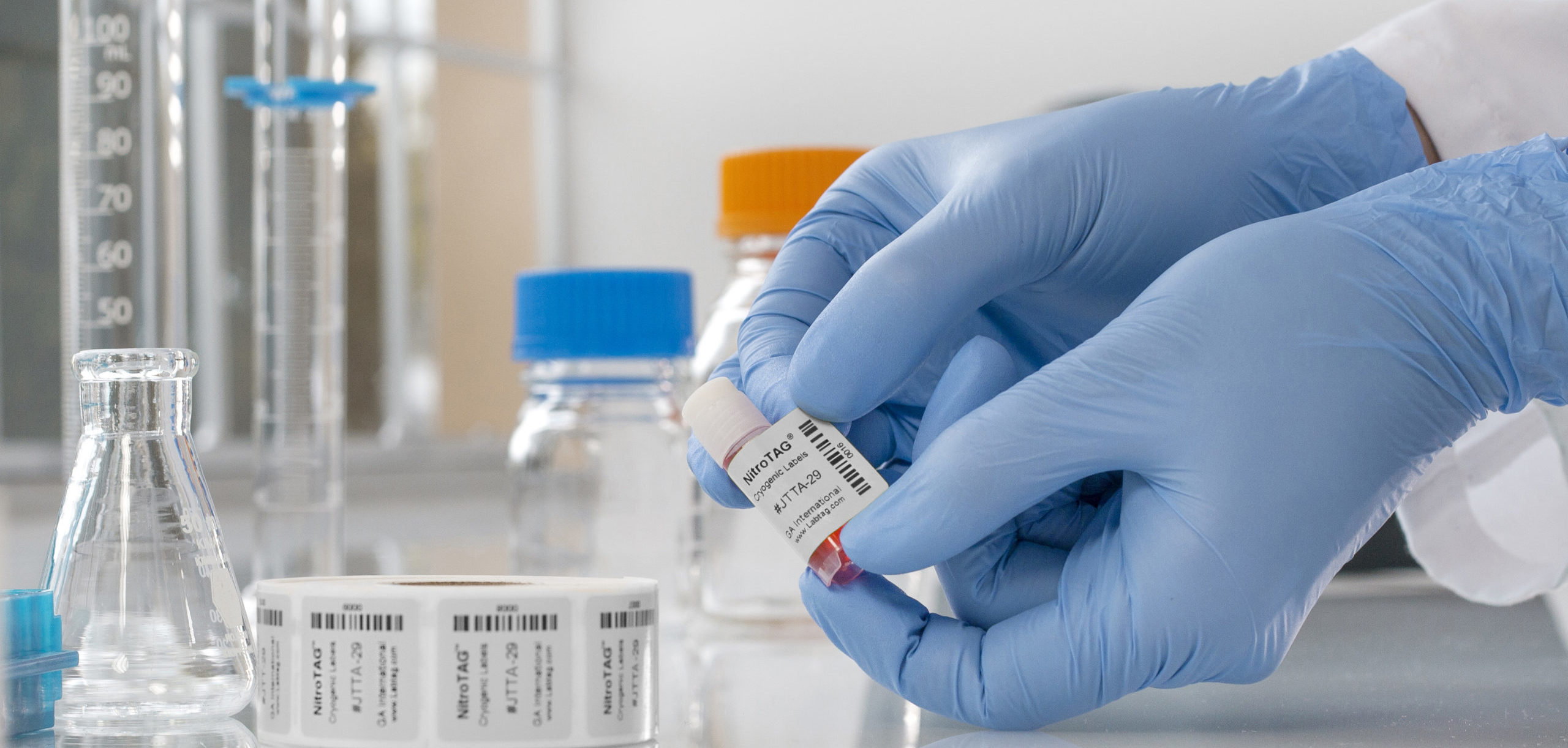
After exploring LabTAG’s catalog of identification solutions online, the lab members of the C-BIGR – Open Biobank reached out to LabTAG for a consultation. Their expert scientists provided recommendations, helping the lab identify the labels that would best suit their needs. The lab then selected a few label types, and LabTAG provided free samples of each for testing to determine the best option for their system. Ultimately, the lab settled on Blackout CryoSTUCK® cover-up labels for frozen surfaces (BUC-29C1-1SW). These labels are unique in that they can be applied to already frozen tubes and vials at temperatures as low as -80°C. As they are blackout labels, they conceal and obscure the underlying label, making it simple to replace the old information with a new label that corresponds to the LORIS LIMS. This has made the process overall more efficient, as Ms. Marie-Noëlle Boivin, a member of the C-BIGR – Open Biobank, explains: “Previously, applying a new label to a cryovial was a challenge. If the samples were on dry ice, we had to wait until the exterior of the vial was warm enough so the label could stick. Now, while the samples are kept on dry ice, we can quickly wipe off any condensation from the cryovial, allowing the label to stick effortlessly. This method cuts the process time in half while ensuring the protection of our biological samples.”

Conclusion
Overall, the lab experienced increased efficiency and reduced unnecessary sample thawing by using LabTAG’s Blackout CryoSTUCK labels. These labels transitioned seamlessly into their workflows, conforming to LORIS LIMS requirements and providing a means to track and trace samples from external collaborators better. With the help of free samples supplied by LabTAG, C-BIGR – Open Biobank optimized this process by testing the labels beforehand, ensuring they complied with their current system. Looking ahead, other technologies that may help further optimize the biobank’s processes include radio-frequency identification (RFID) and automated labeling systems, which can speed up workflows for labs handling large volumes of samples.
Related Case Studies
Read All Case Studies ➡


University
Streamlining Sample Tracking with Cryogenic Labels and the DYMO®LabelWriter™ 550
CryoSTUCK®
DYMO® LabelWriter™ 550
Read The Story

Healthcare
Inside CEYMH: A Smarter Approach to Sample Identification
Inkjet Labels
Cryogenic
Read The Story


Research
Modernizing cryostorage solutions to optimize laboratory sample management
CryoSTUCK®
SnapPEEL™
Read The Story